Riff Logo
Riff Dates (from 24-September-2026 to 04 october 2026)

Yrsa Roca Fannberg weaves stories that transcend borders, much like her own remarkable journeys between Iceland, Sweden, England, and Spain. This multicultural filmmaker creates documentaries that capture the profound intersections between place, identity, and human experience.

Her debut Salóme (2014) won the prestigious Nordisk Panorama Best Nordic Documentary award, while The Last Autumn (2019) premiered at Karlovy Vary and earned jury recognition at RIFF and MajorDocs.

Now, her latest work The Ground Beneath our Feet (2025), had its world premiere at CPH:DOX. Beyond filmmaking, Yrsa teaches at the University of Iceland and curates screenings in Reykjavík.

This year at RIFF, we present her latest film and explore the unique perspective of a filmmaker who truly embodies cinema without borders. We had the privilege to speak with her about her unique way of capturing life’s quieter, often overlooked moments.

News on the website Culinary Screenings at RIFF 2026

RIFF: Welcome, Yrsa Roca Fannberg. First of all, I wanted to ask you what brought you into filmmaking, and what, you would say, defines your approach to filming?

YRSA: I started out by doing fine art, and there was a friend of mine who asked, “Why don’t you do documentary films, since you’re so fond of life stories and anecdotes?”, but I refused. And then, a few years later, I was working for the Edinburgh Film Festival, and I saw this documentary filmmaker, Harutyun Khachatryan, from Armenia. This encounter really inspired me to make a documentary. I then started to research it and made my first film. That’s what got me into documentaries. Regarding my approach, I think it’s very often related to things I’ve experienced and seen, but I don’t want to say that it always happens. My first film, Salomé, was about my mother. The second film, The Last Autumn, was about farmers who are about to abandon the land, and the latest one is about living at Grund, the retirement house where I work. I often start with something in reality that catches my attention. And then, I do a lot of research. I think about it, and I read and watch films. I try to find an approach that I can see cinematically. I’m not the kind of filmmaker who thinks “I can change the world”. I think I can make you reflect and think, hopefully. I don’t answer questions; I’d rather ask the viewer questions. I often go to a particular place with a notebook and a pen, and just write down what I see, how I feel, how I think this can be related, and how I can create something cinematically.

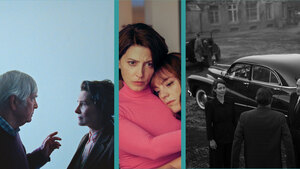
TGBOF Yrsa Roca Fannberg still 1

RIFF: At first sight, when I saw your documentary, I thought, maybe it's quite hard to find cinematography in a retirement house because it's quite a medical setting, and it's something we're not used to seeing. So it was interesting to see how you could find good frames and images to depict the people who live there.

YRSA: Yes, a lot of it is thanks to the wonderful Director of Photography I worked with, Wojciech Staroń. He really has the eye for things that you might not normally see. The camera reveals something you don't see. He has a wonderful eye for what the camera discovers. And of course, I know the people starring in the film. It was really important for me that they are people I look after in their everyday life, to have a true and honest relationship with them. And for this documentary, and actually the previous one, I had a scriptwriter with me, Elín Agla Briem. We discussed a lot before and during the making of the film: we discussed ethics, we asked questions like “What does this mean?” “Is this a routine?” “What is this?” “What does death mean?” “What does it mean to be old?” “What role do they have in society?”... It helped us to deepen the core of the film and to transcend into something more metaphysical. The film isn’t going from A to B, but is like a spiritual, metaphysical journey about this specific stage of life. We also discussed the loss of respect for the elderly, which is where the title comes from as well – The Ground Beneath our Feet. It’s the ground we as humans stand on, our previous generations. Maybe it's funny, maybe it's not the case, but I think it's quite specific. This is actually a coincidence; I talked about it to the people at Grund with whom I have worked for many years. Grund is the last home and the next home, something I found quite spiritual in a way. It is about the value of this age. We are so obsessed with youth culture, with giving people the best birth, the best youth. It's almost like a political question to me. How do we say goodbye to life when you lived so long, and society doesn't consider you anymore, because you've stopped bringing anything into this capitalistic flow. Without it being political, humanity is also political.

RIFF: Your movie is kind of a love poem to the idea of being slow and not always rushing towards things. Was it something you really wanted to depict in this movie, or did it just come naturally?


YRSA: That’s something I was really aware of. I’m a quick person. I’m not the most patient, but there, you just have to walk slowly, and if you’re hurrying, it’s not good. It would be so dishonest to have a fast-paced film, since it goes against the whole purpose of making the film. It goes hand in hand; it would have been fake. I think you also have to trust the viewer, and be true to the filmic material and the filmic universe.

RIFF: And what was your experience of shooting there? How was it to be with the people around you, and how was it to be there with the camera?

YRSA: I think my crew found it very difficult because we have forgotten how to spend time with old people. You come, you have a coffee together, you go back. Some relatives spend a lot of time there, but generally, we have forgotten this. Sometimes they didn’t even really know how to relate to them or to the slowness. For me, it wasn’t so difficult because I’m used to it. It’s a film in which many people appear, its shooting took a long time, and we didn’t know until the end who was going to be there. It’s about the state of mind, and that was mainly the stressful thing. The residents were so kind and generous with their time, and so open. Of course, if someone didn’t want to be recorded, we respected that. But almost all of my characters tell the story with their own mouths. They can say no and know what it means to be filmed. They might not always know what it means to be in a film, and they are aware that they are being recorded. It was such a joy to work with them. I was quite sad when the shooting had to finish, because it was a shared moment. And the old people there loved the Director of Photography. He knew where to put the curtain, where to put the cup, and how to respect them. He didn’t talk too much, but just the interaction and the look made the residents really comfortable with the crew. And of course, they also know me very well.

RIFF: Your work is also about shooting in a very intimate environment, which might also make it exciting to film there because you’re surrounded by people, and you’re sharing the story of their lives. At the same time you also witness the end of their lives. 

YRSA: I mean we don’t really talk about their life. We are so focused on people’s CVs, on their answers to the question: what have you done? But what about who you are today? That’s a very important question, which is why I didn’t want to go back into history. The retirement house is a very sensitive place to be. You are vulnerable and lonely there. I was talking to my aunt, who was 91, and this is something that really happens. Your partner might have died. Your friends are dying or have already died, so it must be lonely. Even if you have your family by your side. Essentially, it’s quite a lonely experience to pass away. In the retirement house, you need to be sensitive towards the subjects, to watch them without belittling them. I remember there was a scene where someone got a nosebleed after shooting it. I felt terrified, scared that he was going to have a heart attack that night because we had forced him to do a little bit too much. After this shoot, he told me “Don’t belittle me”. I think it’s something very important because they have so much more experience than you and me. I think it’s important to have this kind of respect in mind, and not treat them with cotton gloves or cotton balls.

TGBOF Yrsa Roca Fannberg still 2

YRSA: The film is also ultimately about care. Everything was about taking care of the old people, which is what I do every day. Filming them was also caring. To be touched and touched upon return. I love food and can’t stand bad food, so I cooked on the set. I have a big freezer, so I would cook different meals. We shot for a maximum of six days because the residents got tired of us and needed to rest, so the film was shot over a long time in shorter periods. That gave me the opportunity to cook. It's impossible to cook for a fiction crew, but to cook for a documentary crew is not so hard, and for six days, it was fine. This is about bringing attention to all these little things. I would plan meals in advance. I would always try new dishes because it was nice. And then we made a little recipe book. I'm so happy that we selected recipes from the shooting. It became clear that it's more than just a film. It's about the attention to the little things, which I think is evident in the film. We had a clapboard during the shooting, so we found a great way to sync the sound. At the end, I used the clapboard to take pictures of all the characters, and I used them for promotion. I think the attention to all the small details is really important. And the recipe book is a fruit of that.

RIFF: Was there something that really struck you during filming? An action, a thought?

YRSA: There were some beautiful moments. Sometimes, I was even thinking, “Oh my God, what a gift!”. It was powerful to shoot this. Things just happen, and they are a beautiful gift that makes me emotional. But I wouldn’t call these scenes sad, since it’s a strong word. In Icelandic, there’s a word, tregi. It’s this thing between beauty and grief, which was always the balance in the film.

RIFF: I was also thinking about creating memories or capturing something in the present to be able to see it in the future. Was this also a part of your process?

YRSA: The very first starting point for me was the Andy Warhol Screen Tests, which is about the rich and the famous, like Dali and Lou Reed… And I wanted to make a movie about people in a retirement home, the beautiful and the famous. There was something in that process that made it one of the last portraits. A proper, beautiful portrait, in my opinion. Luckily, art maintains. This film is not based on a time within history; it’s a timeless film. Hopefully, the film prevails and survives us all. And, of course, it can become a memory, since many of the people starring have passed away. Part of my research is also taking a lot of photographs. I’ve always done that. I take more pictures than I film. It helps me to decide my gaze, and is a useful tool to discuss with the director of photography.

RIFF: During your movie, I really appreciated seeing real and raw parts of the body on screen, something that we are getting little by little used to seeing. These body parts were shown as landscapes. Would you like to tell us about your creative process and your artistic vision for this movie?

YRSA: I love hands, and I can’t wait for my hands to get old and have the veins out. I keep saying that hands are fascinating. It is something so tactile, so easy to hold someone’s hand to stroke their hand. It’s something you constantly do. In residence, people often need less medicine and more human contact. There is also something about the skin, which has lived a lot. It’s very photographical as it’s like a landscape. It’s like a creek coming down the mountain. The whole skin becomes like a mountain that has been there forever. The skin is like a landscape, if you look at a picture of the sea. It kind of has the same structure, and we are organic things. This is a discussion I also had with my editor when we were constructing the film and thinking. So we shot it a lot. And it was just so beautiful. The hands are such an important element, with the little gestures. They tell you a lot and it was really important to give it space somehow. I love seeing an old person washing their hands. They do so meticulously, this is a generation that actually did things properly, they took care of things, items, and themselves. They wash their hands, they dry them, and take their time in doing so. That was one of the first things I actually imagined was like how a person washes their hands, between every finger, every part of the hand, they dry every part of the hand. And another thing was the importance of sound. I love working with sound. The sound designer, Björn Viktorsson, is so sensitive and talented, he’s really good, and I really appreciate his work on the film. But it was a balance because you don’t want to add too many things. You want to keep it there. So you wonder how a hand stroking another hand sounds, and what’s the sound of rings when they’re too big for your fingers. It was important to me, but also some kind of abstract sound because it can also be an abstract moment when you drift in and out of reality, because that also happens. And that was also one of the tricky things. How to film decline in health without it being explicit, how to find the right balance between respect and dignity without a sentimental approach. I was really fighting against sentimentality and cuteness, romanticizing and belittling.

Bildschirmfoto 2025 09 12 um 10.01.38

RIFF: Do you have a favourite Icelandic film or director?

YRSA: There are very good Icelandic films and a lot of filmmakers I respect, and I like their works. Rúnar Rúnarsson and Hlynur Pálmason, for example. Friðrik Þór Friðriksson has made some amazing films like Children of Nature. It had a huge impact on me. I think Nói Albinói was also fantastic.

RIFF: And the final question is, as you might know, in the past year. RIFF has always had special screenings in special places in Iceland. And what’s the most unusual place where you’ve seen a movie in your life?

YRSA: I like the cinema. I like to go there, being in the dark… I’m old fashioned. There’s nothing else like a dark room with a good sound system where you just turn off the outside world. Yeah, that’s my favorite experience. And I think in today’s world, we are always thinking about involving everyone with all the noise that is going out, which is why I so strongly advocate for going to a cinema where you just enter for 110 minutes, 20 minutes or one and a half hours of a different experience. Rather than being constantly bombarded with everything else. I’m an advocate for movie theatres; there’s nothing better than going there to see a movie.

This Interview has been edited and shortened for clarity.

RIFF 2025 takes place in Reykjavík from September 25th to October 5th, join us for 11 days of awarded films, great special events and don’t miss the wonderful film of Yrsa –The Ground Beneath our Feet.